
Artificial Intelligence (AI) and robotics are transforming industries worldwide. They automate processes, enhance productivity, and drive innovation across sectors such as healthcare, education, manufacturing, and agriculture. From intelligent machines that assist in surgeries to robots managing warehouse operations, these technologies are changing how people work, learn, and solve problems.
In Kenya, this global shift aligns closely with Vision 2030, which emphasises science, technology, and innovation as key drivers of economic growth. The Competency-Based Curriculum (CBC) further supports this vision by focusing on practical, hands-on learning that nurtures creativity, problem-solving, and digital literacy among learners.
Preparing students early for careers in AI and robotics is no longer optional; it’s essential. By equipping young learners with the right skills and mindset, schools can help build a future-ready workforce capable of leading Kenya’s digital transformation.
Partnerships with EdTech platforms such as All Things Programming are also playing a critical role in this journey, providing schools with accessible resources, teacher training, and coding programs that bring AI and robotics education to life.
Understanding AI and Robotics in the Modern World
Artificial Intelligence (AI) refers to the ability of machines to mimic human intelligence, learning from data, recognizing patterns, making decisions, and improving over time. Robotics, on the other hand, involves designing and building machines that can perform physical tasks, often powered by AI to make them smarter and more autonomous. When combined, AI and robotics create powerful systems capable of thinking, sensing, and acting with minimal human intervention.
In the real world, these technologies are transforming how industries operate. In healthcare, AI assists doctors in diagnosing diseases faster and more accurately. For agriculture, smart robots help farmers plant, water, and harvest crops efficiently. In manufacturing, automation speeds up production and reduces human error. Even in education, AI-powered platforms personalize learning by adapting lessons to each student’s needs and pace.
For Kenya, the rise of AI and robotics presents an opportunity to leapfrog traditional barriers to development. Automation can streamline industries, while smart farming technologies can boost food security and productivity.
Additionally, the growth of tech-driven entrepreneurship allows young innovators to create local solutions for global challenges, from clean energy to logistics and digital services. By embracing these technologies early, Kenyan schools can empower the next generation to lead in innovation, not just consume it.
The Role of Schools in Shaping Future Talent
Schools play a pivotal role in nurturing the innovators, engineers, and problem-solvers of tomorrow. Beyond teaching theory, they serve as incubators for creativity and innovation, where young minds can explore ideas, experiment with technology, and develop solutions to real-world challenges.
Kenya’s Competency-Based Curriculum (CBC) provides the ideal framework for this transformation. By emphasizing creativity, critical thinking, collaboration, and digital literacy, CBC encourages learners to apply knowledge rather than simply memorize it. This approach aligns naturally with the principles of AI and robotics, which require both analytical thinking and imaginative problem-solving.
To prepare students effectively for the future, schools need to integrate practical, project-based learning into core STEM subjects: science, technology, engineering, and mathematics. Students could design simple robots, code AI-powered applications, or work on group projects that address local community issues through technology. For more on why early coding education matters, see Top 5 Benefits of Teaching Coding in Primary Schools.
Most importantly, schools should foster curiosity and experimentation from early grades. When learners are encouraged to ask questions, test ideas, and learn from mistakes. They develop the confidence and creativity needed to thrive in AI and robotics careers. This mindset, cultivated early, lays the foundation for lifelong learning and innovation.
Curriculum Integration Strategies
Preparing students for AI and robotics careers begins with the thoughtful integration of technology into the school curriculum. Kenyan schools can take several key steps to ensure learners gain both the knowledge and hands-on experience needed to thrive in a digital world.
First, coding and computational thinking should be introduced from the primary level. Early exposure helps learners develop logical reasoning, problem-solving, and creativity, skills essential for understanding how AI and robots work. Coding can be taught through fun, age-appropriate activities such as building simple animations or programming basic robots.
Second, schools can establish robotics clubs and labs where students learn through practical projects. These spaces allow learners to apply classroom concepts to real-world challenges, fostering teamwork, innovation, and confidence in using technology.
Third, teachers can adopt AI-based learning tools to personalize student learning. Adaptive platforms can identify each student’s strengths and learning gaps, offering tailored support and feedback that enhances understanding and performance.
Collaboration with EdTech partners such as All Things Programming can further strengthen this approach. These partnerships make it easier for schools to access affordable AI and robotics content, professional development for teachers, and structured coding programs aligned with CBC goals. You can learn more about how teachers are trained through this program in We Train Teachers to Teach Coding: Here’s How It Works.
Finally, continuous teacher training is vital. Educators must stay updated on emerging technologies and effective digital pedagogy to guide students confidently in their AI and robotics learning journeys. When teachers are empowered, students are better equipped to explore, create, and innovate.
Essential Skills for AI and Robotics Careers
Building a strong foundation for careers in AI and robotics requires a balance between technical expertise, soft skills, and a sense of digital responsibility. Schools play a crucial role in helping students develop this holistic skill set that blends innovation with ethics and teamwork.
Technical skills form the backbone of AI and robotics education. Students should learn programming languages such as Python or JavaScript, understand data analysis and machine learning basics, and gain exposure to electronics and engineering principles. These skills enable learners to design, build, and operate intelligent systems while understanding the underlying technology.
Alongside technical knowledge, soft skills are equally essential. The AI and robotics fields thrive on creativity, teamwork, and problem-solving, skills that allow innovators to turn ideas into practical solutions. Learners should also develop adaptability, since technology evolves rapidly, and ethical awareness, to ensure responsible use of AI that benefits society.
Finally, digital citizenship must be part of every student’s learning journey. As AI systems increasingly handle personal data and make decisions affecting people’s lives, understanding data privacy, online safety, and ethical technology use becomes critical. Teaching students how to use technology responsibly prepares them not just for jobs, but for leadership in a digital future.
Overcoming Challenges
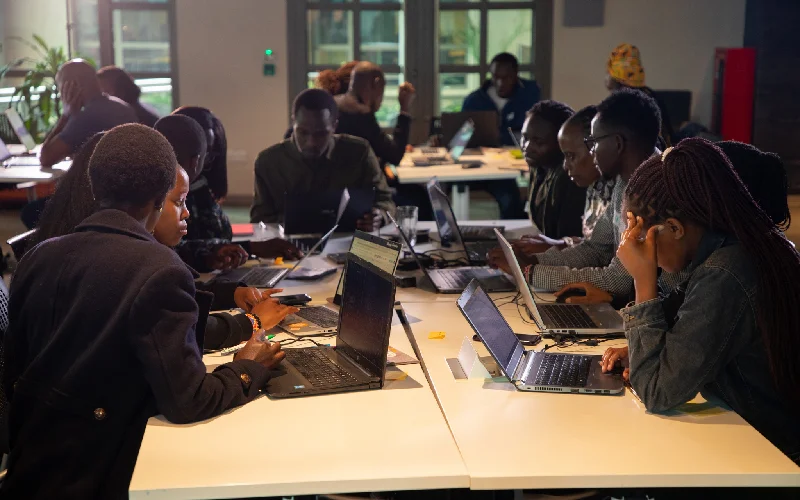
While integrating AI and robotics into Kenyan schools holds great promise, several challenges must be addressed to ensure equitable and sustainable progress.
One major barrier is the limited access to technology, especially in rural schools. Many institutions still lack computers, stable internet connections, and up-to-date learning resources. Without these basics, students risk being left behind in the global digital race.
Another challenge lies in teacher training gaps. Few educators have formal exposure to AI, robotics, or computational thinking. Without continuous professional development, even well-designed programs may fail to achieve their goals.
Additionally, high equipment and maintenance costs can make robotics labs and AI learning tools seem out of reach for many schools, especially those operating with limited budgets.
To overcome these barriers, several strategies can be implemented:
- Public-private partnerships (PPPs): Government bodies, tech companies, and NGOs can collaborate to supply digital infrastructure, training, and curriculum support.
- Low-cost robotics kits: Affordable, locally assembled kits can make hands-on learning possible for more students.
- Open-source AI platforms: Using free or low-cost software tools enables students and teachers to explore AI concepts without expensive licenses.
By embracing collaboration and innovation, Kenya can bridge these gaps and ensure that every learner, regardless of location, has the opportunity to participate in the AI and robotics revolution.
Case Studies and Local Success Stories
Across Kenya, several schools and organizations are already taking bold steps to integrate AI and robotics into education, proving that innovation is possible even with limited resources. These local success stories demonstrate how collaboration, creativity, and commitment can inspire a new generation of tech-savvy learners.
Some Kenyan schools have established robotics clubs where students build simple machines, learn coding logic, and compete in national STEM challenges. Through these activities, learners gain confidence in applying classroom knowledge to real-world situations. Schools participating in CBC-aligned tech programs are discovering that hands-on learning not only improves academic performance but also boosts creativity and teamwork.
Innovation hubs and coding bootcamps across the country, such as those in Nairobi, Mombasa, and Kisumu, are also playing a vital role. They provide mentorship, short-term training, and access to digital tools that expose learners to AI, robotics, and entrepreneurship. Many students who start in such programs go on to develop prototypes and startups that address local challenges, from smart irrigation systems to healthcare apps.
A notable example is the collaboration between All Things Programming and several CBC schools. Through teacher training sessions, affordable coding kits, and interactive AI workshops, All Things Programming helps bridge the gap between curriculum goals and practical tech experience. These partnerships show how strategic cooperation between schools and EdTech platforms can make advanced technology education accessible to all learners.
Building an AI-Ready Generation

The integration of AI and robotics education in Kenyan schools holds great promise for the nation’s future. In the long term, it will drive innovation, improve employability, and boost global competitiveness. By equipping students with technical and problem-solving skills, Kenya can build a workforce ready to lead in industries that rely on automation and intelligent systems.
As the world embraces the Fourth Industrial Revolution, Kenya has the potential to become a regional hub for AI and robotics innovation in Africa. The country has a growing tech ecosystem, a youthful population, and a forward-looking education system. These strengths can help Kenya attract global partnerships, create new industries, and generate high-quality jobs. Schools that develop these skills today are shaping the innovators and entrepreneurs of tomorrow.
To realize this vision, educators, parents, and policymakers must invest in early AI education. Teachers need ongoing training, schools require modern learning tools, and families should encourage curiosity and creativity in children. By making AI and robotics a core part of learning, Kenya can empower its youth to not only adapt to the future but to shape it.
Conclusion
As technology continues to redefine the world, AI and robotics education offer Kenyan learners a gateway to limitless opportunities. By teaching coding, creativity, and critical thinking in the CBC, schools can develop problem-solvers for the digital economy.
Preparing students for the future requires more than access to tools. It demands collaboration among educators, policymakers, parents, and EdTech partners. Platforms like All Things Programming show that hands-on learning can turn classrooms into innovation hubs.
Investing in AI and robotics education today is an investment in Kenya’s future prosperity. By equipping young minds with the right skills, ethics, and mindset, the country can nurture a generation of creators, innovators, and leaders. These future leaders will help shape a smarter, more inclusive digital world.