
Kenya’s Competency-Based Curriculum (CBC) emphasises practical learning, creativity, and problem-solving, moving away from rote memorisation toward developing real-world skills. However, many learners still struggle to apply Science and Math concepts beyond the classroom. Subjects that should inspire curiosity often feel abstract or difficult, leaving both parents and teachers searching for better ways to make learning engaging and meaningful.
One powerful yet underused solution is kids coding. Coding isn’t just about computers; it’s about thinking logically, solving problems step-by-step, and understanding how systems work, all of which directly strengthen Science and Math skills. Through fun, hands-on coding projects, children can visualize abstract ideas, test hypotheses, and see results instantly, making learning both enjoyable and effective.
Organizations like All Things Programming are already helping schools and parents in Nairobi make this shift. Their structured, age-appropriate coding programs align with CBC goals, showing how technology can enhance Science and Math learning without overburdening teachers or parents.
Parents who are new to this can read What is Scratch Programming for Kids to understand how beginner-friendly coding tools work and how they support early learning.
With simple guidance and access to free digital tools, Nairobi parents can play a key role in boosting their children’s performance. By introducing coding at home, they can nurture curiosity, sharpen reasoning, and help their children excel in CBC Science and Math.
Why Coding Supports Science and Math Learning
Coding naturally strengthens the same skillls that Science and Math aim to build. It helps learners think logically, solve problems creatively, and connect theory to real-world applications, all of which are central to CBC learning goals. Here’s how:
1. Enhances Logical Thinking
When children code, they learn to break down problems into smaller, manageable steps, the same process used in solving Math equations or conducting scientific experiments. This structured way of thinking trains their brains to approach challenges systematically, improving both accuracy and reasoning.
2. Connects Theory to Practice
Many learners struggle because Science and Math often feel abstract. Coding bridges that gap by allowing children to see the results of their learning. For instance, writing a simple code to calculate distance or simulate gravity turns textbook formulas into interactive experiences, reinforcing classroom lessons through hands-on practice.
3. Improves Creativity and Innovation
Coding encourages experimentation. Children can predict what will happen when they change a value or add a new command, similar to forming and testing hypotheses in Science. This process nurtures curiosity and innovation, helping them explore multiple solutions to a single problem.
4. Builds Persistence
Every coder encounters errors, known as “bugs.” Learning to fix them develops patience, perseverance, and critical thinking, key traits for academic success. Over time, children gain confidence in tackling difficult Science and Math tasks because they’ve learned not to give up when faced with challenges.
By combining logic, creativity, and persistence, coding empowers children to master Science and Math concepts in a way that’s both engaging and deeply rewarding.
How Parents in Nairobi Can Get Started
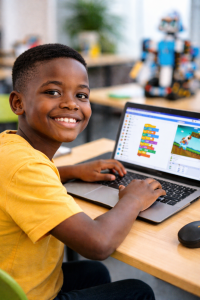
Introducing coding doesn’t require advanced technical skills or expensive equipment, just curiosity, consistency, and the right resources. Nairobi parents can begin by using simple, child-friendly tools and creating supportive learning environments at home.
1. Use Free Online Tools
Start with beginner-friendly platforms like Scratch, Code.org, or Tynker. These websites use colorful blocks and animations to teach coding concepts through games and stories. Children can learn how to create interactive projects while naturally strengthening their Math and Science reasoning. Most of these tools are free and accessible on smartphones, tablets, or computers.
2. Leverage After-School Programs
Nairobi has an increasing number of community coding clubs and weekend workshops where children can learn alongside peers. Programs such as All Things Programming and local STEM hubs offer structured, hands-on sessions tailored to different age groups. Parents looking for options can explore Where to Find Affordable Coding Classes for Kids in Nairobi to choose suitable programs that match their child’s age and interests.
3. Integrate Coding at Home
Parents can make coding part of everyday learning. Simple projects like building a calculator, creating a weather tracker, or designing a plant growth simulation directly reinforce topics taught in Math and Science. Encouraging children to explain how their code works helps deepen their understanding of both the concept and the logic behind it.
4. Collaborate with Teachers
Parents and teachers can work together to ensure coding supports the school curriculum. Ask teachers which Math or Science topics your child finds challenging, then find coding activities that make those subjects more interactive, for example, visualizing geometric shapes or simulating energy transfer. Collaboration ensures that coding becomes a powerful extension of what’s already being taught in class.
By combining online tools, community programs, and home-based projects, Nairobi parents can make coding a natural and enjoyable part of their child’s learning journey, one that directly strengthens their CBC Science and Math performance.
Simple Coding Activities That Strengthen CBC Subjects
Coding doesn’t have to be complex to make a big impact. Even simple projects can help learners connect classroom lessons to real-life applications. By combining creativity with critical thinking, children can better understand abstract Math and Science ideas. Here are a few examples that parents in Nairobi can try with their children:
For Mathematics:
- Build a Multiplication Quiz
Using Scratch or Python, children can design a fun multiplication game that tests their speed and accuracy. This activity helps them practice arithmetic while improving logical thinking and attention to detail. - Visualize Shapes and Angles
With a few coding commands, learners can draw triangles, circles, and polygons on the screen. This activity strengthens their understanding of geometry — especially how angles, lines, and measurements relate to one another. It also makes abstract Math concepts more visual and memorable.
For Science:
- Simulate Plant Growth or the Water Cycle
Using simple animations in Scratch, students can recreate natural processes such as how plants grow or how water evaporates and condenses. This helps them visualize scientific concepts in a fun, interactive way while reinforcing cause-and-effect thinking. - Create Mini Weather or Temperature Trackers
Older learners can use basic programming (in Python or on micro:bit devices) to record or display daily temperatures. This connects coding with data collection, observation, and analysis, all key CBC Science competencies.
Through these hands-on projects, coding turns learning into exploration. Children don’t just memorize formulas or definitions; they experience how Math and Science work, strengthening their curiosity, comprehension, and problem-solving skills.
How to Support Children’s Learning at Home
Parents play a powerful role in shaping how children view learning. When coding becomes part of everyday family life, it helps children stay curious, confident, and motivated to explore Science and Math concepts on their own. Here are a few practical ways Nairobi parents can create that supportive environment at home:
1. Set Aside Weekly “Coding and Learning” Time
Dedicate at least one evening or weekend session to hands-on learning. Even 30 minutes a week of guided coding practice can make a big difference. Consistency helps children build routine, stay engaged, and gradually strengthen their problem-solving skills.
2. Encourage Teamwork Between Siblings or Friends
Learning together makes coding more fun and social. Siblings or classmates can collaborate on small projects, such as creating a quiz, designing a mini-game, or animating a Science topic. Teamwork builds communication and collaboration skills, both of which are emphasised under CBC.
3. Celebrate Small Coding Milestones
Recognize your child’s progress, whether they completed a small animation, solved a bug, or built their first project. A simple “Well done!” or display of their work boosts motivation and encourages perseverance. Celebrating milestones helps children see learning as a rewarding journey, not a competition.
4. Use Storytelling to Reinforce Understanding
After each project, ask your child to explain how their code works and what they learned. This storytelling approach helps solidify concepts, strengthens communication skills, and builds confidence. It also allows parents to see how coding connects directly to Math and Science lessons in a fun, relatable way.
By combining consistency, collaboration, and encouragement, parents can turn their homes into nurturing spaces for creativity and discovery, where coding becomes a bridge to stronger Science and Math performance.
IMPACT SUMMARY

From these examples, some of the recurring positive outcomes have been:
- Increased creativity & curiosity, Students get excited about building their own games, robots, and apps. They explore “what if” scenarios rather than just memorizing formulas.
- Improved grades / subject understanding, Coding projects often reinforce the same logical thinking needed in Math/Science. Schools and parents report that students who do coding tend to understand abstract topics more easily.
- Stronger problem-solving skills & persistence, Working through bugs in code, or trial-and-error in robotics, teach students how to fail, reflect, and persist, which transfers to school work.
- Confidence and empowerment, especially in girls and underserved communities; creating something digital builds confidence. Teachers also gain more confidence in using technology in the classroom.
To conclude, coding is more than a tech skill; it’s a tool that helps children think critically and apply what they learn in Science and Math. With free online tools, community programs, and guidance from initiatives like All Things Programming, Nairobi parents can easily introduce coding at home. By starting small, they can spark curiosity, build confidence, and help their children excel in the CBC and beyond.